
What are FODMAPs?
The carbs in trail food, what the acronym means, and how water and gas fit in.
A long name. Familiar food.
FODMAP stands for fermentable oligosaccharides, disaccharides, monosaccharides and polyols. These are groups of short-chain carbohydrates. [1]
- Fermentable: gut bacteria can break them down.
- Oligosaccharides: fructans and galacto-oligosaccharides (GOS).
- Disaccharides: lactose.
- Monosaccharides: fructose in excess of glucose.
- And polyols: sugar alcohols such as sorbitol and mannitol.
FODMAPs in the food you pack
These carbohydrates can appear in familiar meals and snacks. Examples to recognize on a label include: [1] [2]
- Onion or garlic powder in a savory meal: fructans.
- Milk powder in a creamy dinner: lactose, relevant when lactose isn’t well digested.
- Inulin or chicory-root fibre in a bar: fructans.
- Honey in a sweet snack: excess fructose.
- Sorbitol or mannitol in sugar-free snacks: polyols.
What happens inside?
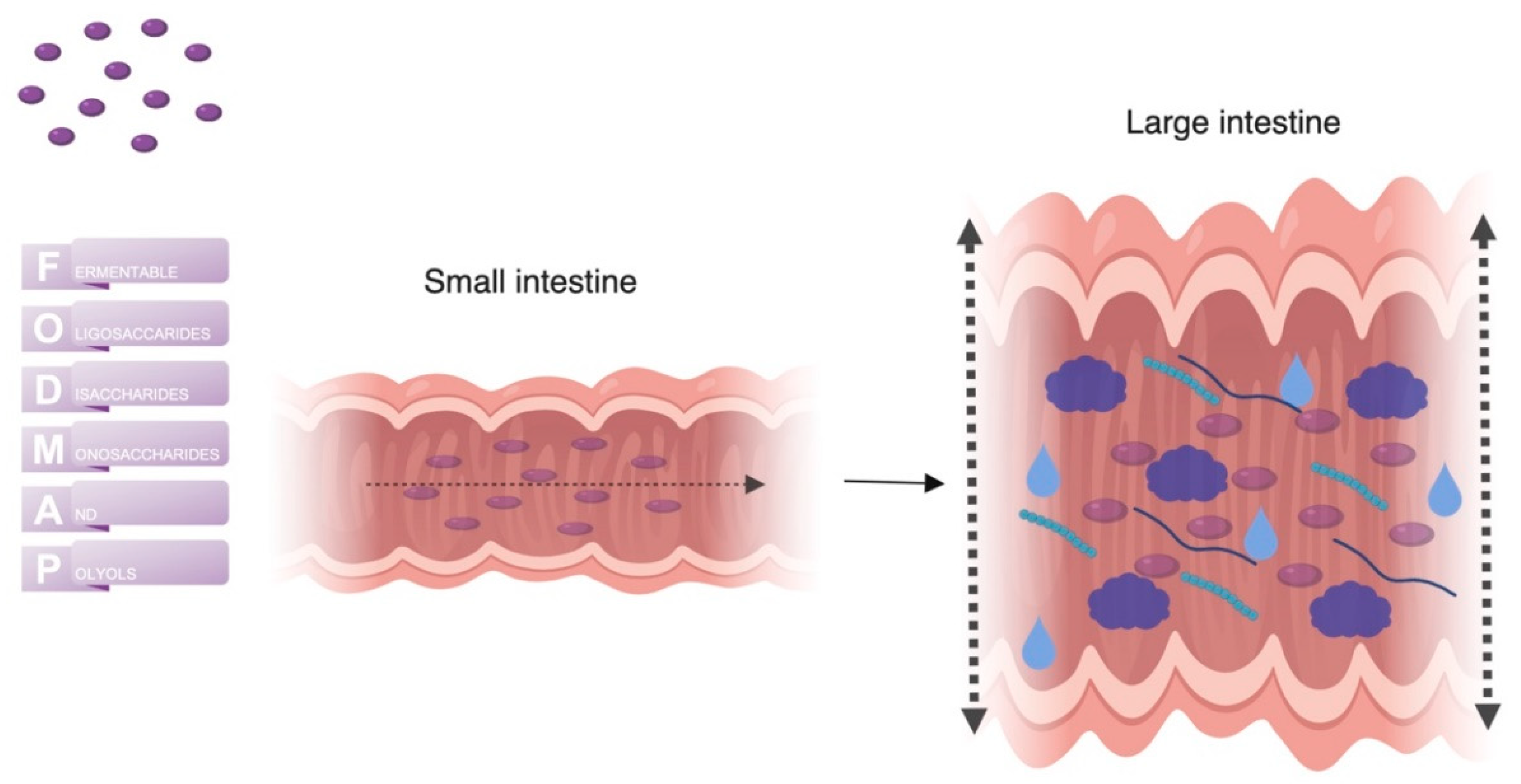
When these carbohydrates are not fully digested or absorbed, some can draw extra water into the small intestine. Those reaching the large intestine can be fermented by bacteria, producing gas. [1] [4]
Different FODMAPs have different effects. In an MRI study of 16 healthy volunteers, fructose increased small-intestinal water, while inulin mainly increased gas in the large intestine. The study used experimental drinks, not trail meals. [3]
 Open full-size figure (new tab)
Some incompletely absorbed carbohydrates reach the large intestine, where bacteria ferment them and produce gas. The small-intestinal water effect is explained above.
Algera J, Colomier E & Simrén M (2019), Figure 4, The Dietary Management of Patients with Irritable Bowel Syndrome: A Narrative Review of the Existing and Emerging Evidence. Created with BioRender. © 2019 authors. CC BY 4.0. Resized for display; otherwise unchanged.
Why it matters on the trail
Gas is a normal part of digestion, but excess gas can be uncomfortable or simply unwelcome on a trip. [5]
The practical link is what’s in the meal and how much you eat. FODMAPs occur in nutritious foods, and the recipe, serving size and your tolerance all matter. [1] [6]
Sources & research
- University explainerMonash University: About FODMAPs and IBS ↗
- Research-dietitian guidanceMonash University: Label Reading and FODMAPs ↗
- Randomized crossover MRI studyMurray et al. (2014), American Journal of Gastroenterology: differential effects of FODMAPs ↗
16 healthy volunteers; experimental carbohydrate drinks. Examines water and gas responses, not a backpacking-meal trial.
- Narrative review · Figure 4Algera, Colomier & Simrén (2019), Nutrients: dietary management of IBS ↗
Full figure reproduced under CC BY 4.0; created with BioRender.
- NIH patient guidanceNIDDK: Symptoms and causes of gas in the digestive tract ↗
- Research-dietitian guidanceMonash University: Serving size and FODMAPs ↗
Links checked October 23, 2026. Source publication or review dates may be earlier.
Educational only, not medical advice. Not dietitian-reviewed.